
How Does the 1099-C Cancellation of Debt Form Impact Your Taxes?
A Form 1099-C reports canceled debt, and the IRS may treat the forgiven balance as taxable income. Do not ignore it. Bankruptcy and insolvency are two exclusions that can make canceled debt non-taxable, claimed using Form 982. If you already paid tax on forgiven debt, you may have options.
Few things are more frustrating than finally resolving a debt only to discover the IRS may consider part of that forgiven balance taxable income.
If you recently received a Form 1099-C, Cancellation of Debt, don’t panic. While canceled debt is often taxable, many taxpayers qualify for exclusions that can significantly reduce—or even eliminate—the tax consequences.
Understanding how cancellation-of-debt income works can help you avoid costly mistakes and determine whether additional tax relief may be available.

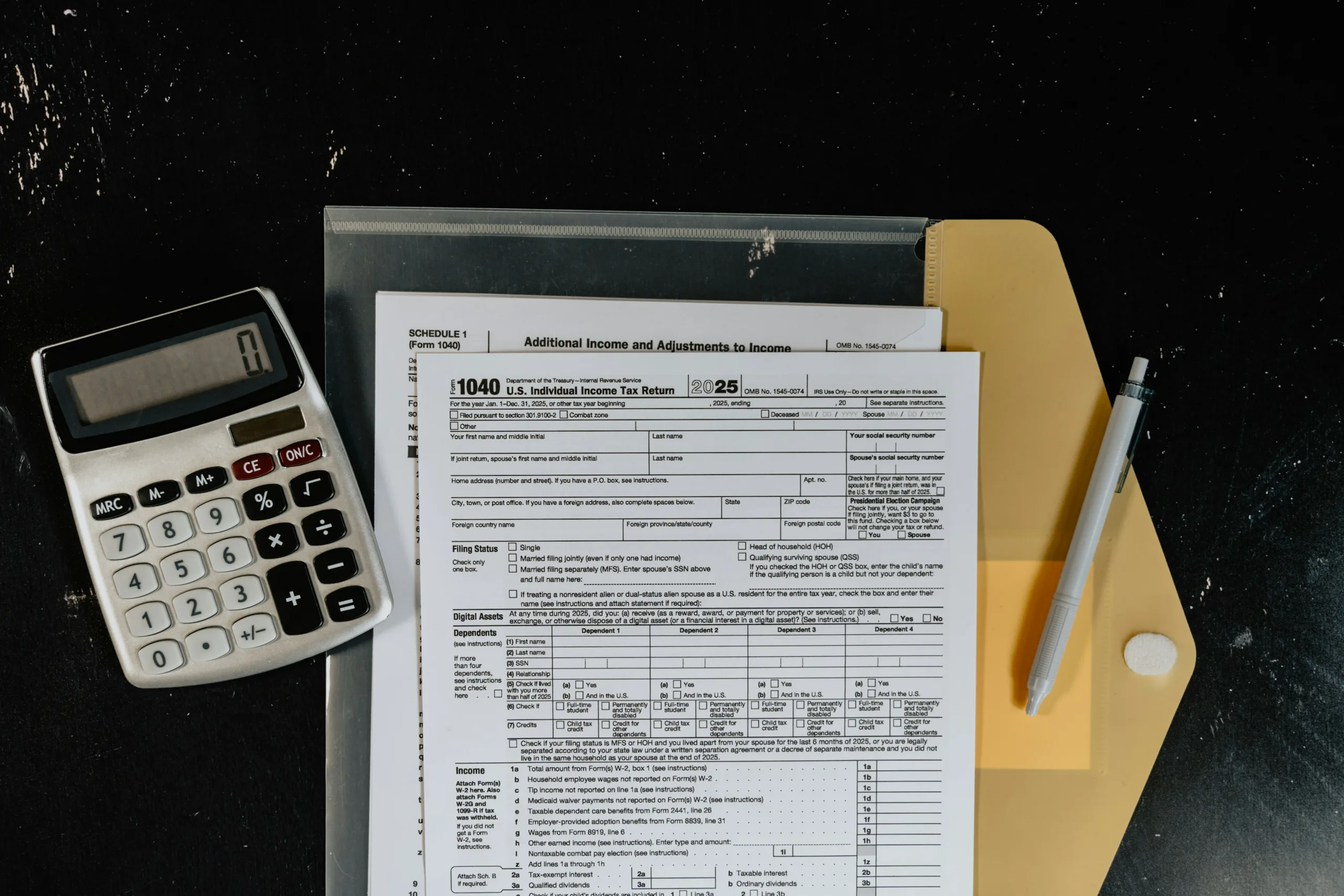
Business concept about Form 1099-C Cancellation of Debt with phrase on the page.
What Is Form 1099-C?
When a lender, credit card company, or other creditor forgives, cancels, or discharges a debt, the IRS generally treats the forgiven amount as income. If a qualifying creditor cancels $600 or more of debt, they are typically required to issue Form 1099-C and report the canceled amount to the IRS.
For example, if you owed $10,000 on a credit card and settled the account for $4,000, the remaining $6,000 that was forgiven may be considered taxable income.
However, receiving a Form 1099-C does not automatically mean you owe taxes on the entire amount.
Don’t Ignore a Form 1099-C
Because the IRS receives a copy of Form 1099-C, failing to address it on your tax return can trigger notices, additional tax assessments, penalties, and interest.
Even if you never receive the form in the mail, you may still be responsible for reporting cancellation-of-debt income if the creditor reported it to the IRS. For that reason, it’s important to review your tax situation carefully whenever a debt has been forgiven.
When Canceled Debt May Not Be Taxable
The tax code provides several exclusions that may allow you to exclude some or all canceled debt from your taxable income.
Common exclusions include:
- Debt discharged through bankruptcy
- Debt canceled while you were insolvent
- Certain qualified farm debts
- Certain qualified real property business debts
- Certain qualified principal residence debt, when applicable under current law
Many of these exclusions are claimed using IRS Form 982, Reduction of Tax Attributes Due to Discharge of Indebtedness.
Bankruptcy Exclusion
One of the most straightforward exclusions applies to debt discharged through a bankruptcy proceeding under Title 11 of the U.S. Code.
If a debt was legally discharged in bankruptcy, the forgiven amount generally does not need to be included in taxable income. However, taxpayers must still properly report the exclusion and may need to file Form 982 with their tax return.
Insolvency Exclusion
The insolvency exclusion is one of the most frequently used forms of cancellation-of-debt relief.
A taxpayer is considered insolvent when their total liabilities exceed the fair market value of their assets immediately before the debt is canceled.
Example 1: Fully Excluded Debt
Suppose your assets total $35,000 and your debts total $45,000. You are insolvent by $10,000.
If a creditor forgives $8,500 of debt, the entire $8,500 may qualify for exclusion because your insolvency exceeds the amount forgiven.
Example 2: Partially Excluded Debt
Using the same facts, assume the creditor forgives $14,000 of debt.
Because you were insolvent by only $10,000, you may exclude $10,000 of the canceled debt. The remaining $4,000 would generally be taxable income.
The IRS provides worksheets in Publication 4681 to help taxpayers determine the extent of their insolvency.
What Is Form 982?
Form 982 allows eligible taxpayers to claim exclusions for canceled debt and explain to the IRS why some or all of the amount reported on Form 1099-C should not be included in taxable income.
While the form can appear intimidating, it is often the key to avoiding unnecessary taxes on forgiven debt. Taxpayers claiming bankruptcy, insolvency, and several other cancellation-of-debt exclusions generally use this form.
What If You Already Paid Tax on Forgiven Debt?
If you later discover that you qualified for an exclusion but reported the canceled debt as taxable income, you may be able to amend your return and request a refund.
Generally, taxpayers have three years from the date the original return was filed to submit an amended return and claim a refund. Whether an amendment is worthwhile depends on the facts of your situation and the amount of tax involved.
The Bottom Line
Receiving a Form 1099-C doesn’t automatically mean you’ll owe additional taxes. While canceled debt is often treated as income, many taxpayers qualify for exclusions that can reduce or eliminate the tax impact entirely.
Because the rules surrounding cancellation-of-debt income can be complex, it’s important to evaluate your situation carefully before filing your return. A qualified tax professional can help determine whether bankruptcy, insolvency, or another exclusion applies and ensure the proper forms are filed with the IRS.
Getting the Help You Deserve With Your Tax Debt
Receiving a Form 1099-C can be unsettling, but it doesn’t automatically mean you’ll owe additional taxes. Depending on your circumstances, there may be exclusions or other provisions available that can reduce or eliminate the tax impact of canceled debt.
Because every taxpayer’s financial situation is different, it is important to evaluate your options before filing your return or responding to an IRS notice. Taking the right steps now can help you avoid unnecessary taxes, penalties, and future complications.
If you’ve received a Form 1099-C or have questions about canceled debt and its tax consequences, contact us for a free consultation by calling (xxx) xxx-xxxx. Our experienced tax professionals can review your situation, explain your options, and help you determine the best path forward.

October 15, 2026
October 15, 2026